 Surface Sprays & Wipes
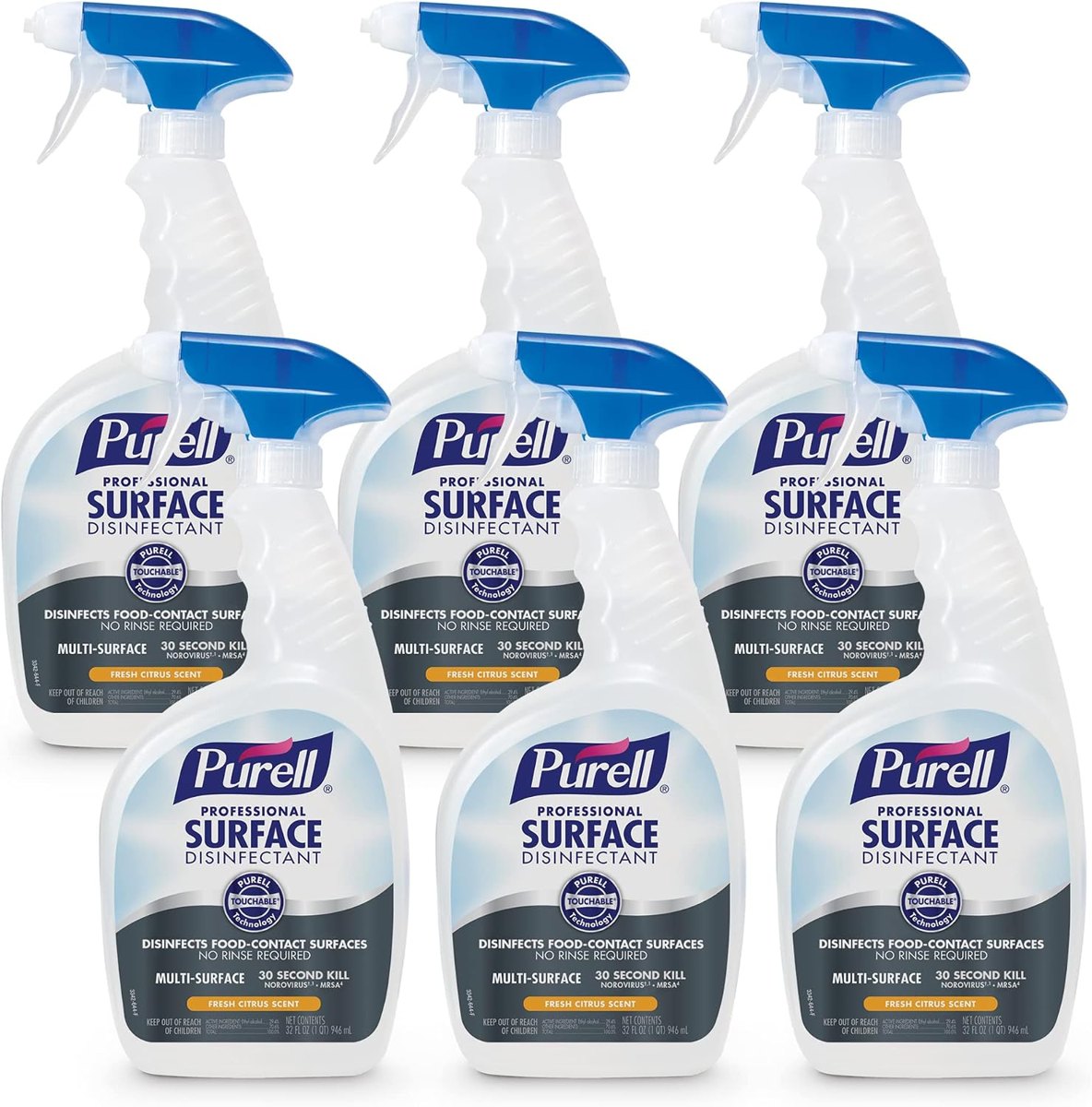
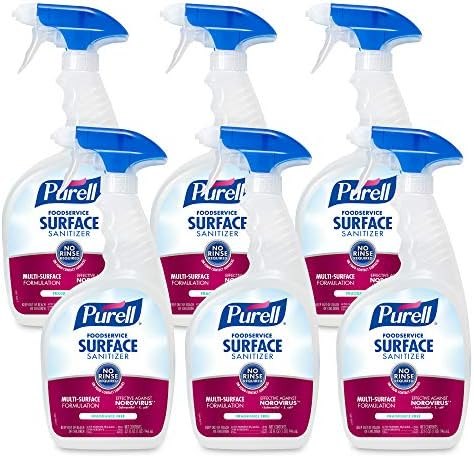
PURELL Professional Surface Disinfectant Spray Bottle, 6ct x 32 oz
$34.39★★★★★ 4.7 (1,385)

A disinfectant that is wiped off too soon is a cleaner. The kill happens while the surface is wet, so the two numbers that matter are the contact time on the label and the kind of surface under it.
Sanitizing and disinfecting are legal terms with test methods behind them. A sanitizer reduces bacteria on a surface by 99.9% within 30 seconds, which is the standard for food-contact surfaces: the prep table, the cutting board, the dining table. A disinfectant kills nearly all of the bacteria and viruses on its label, typically within one to ten minutes of wet contact, which is what a doorknob, a toilet handle or a cart needs in cold and flu season. PURELL Foodservice products are sanitizers; PURELL Professional and Healthcare products are disinfectants, and on soft surfaces they sanitize.
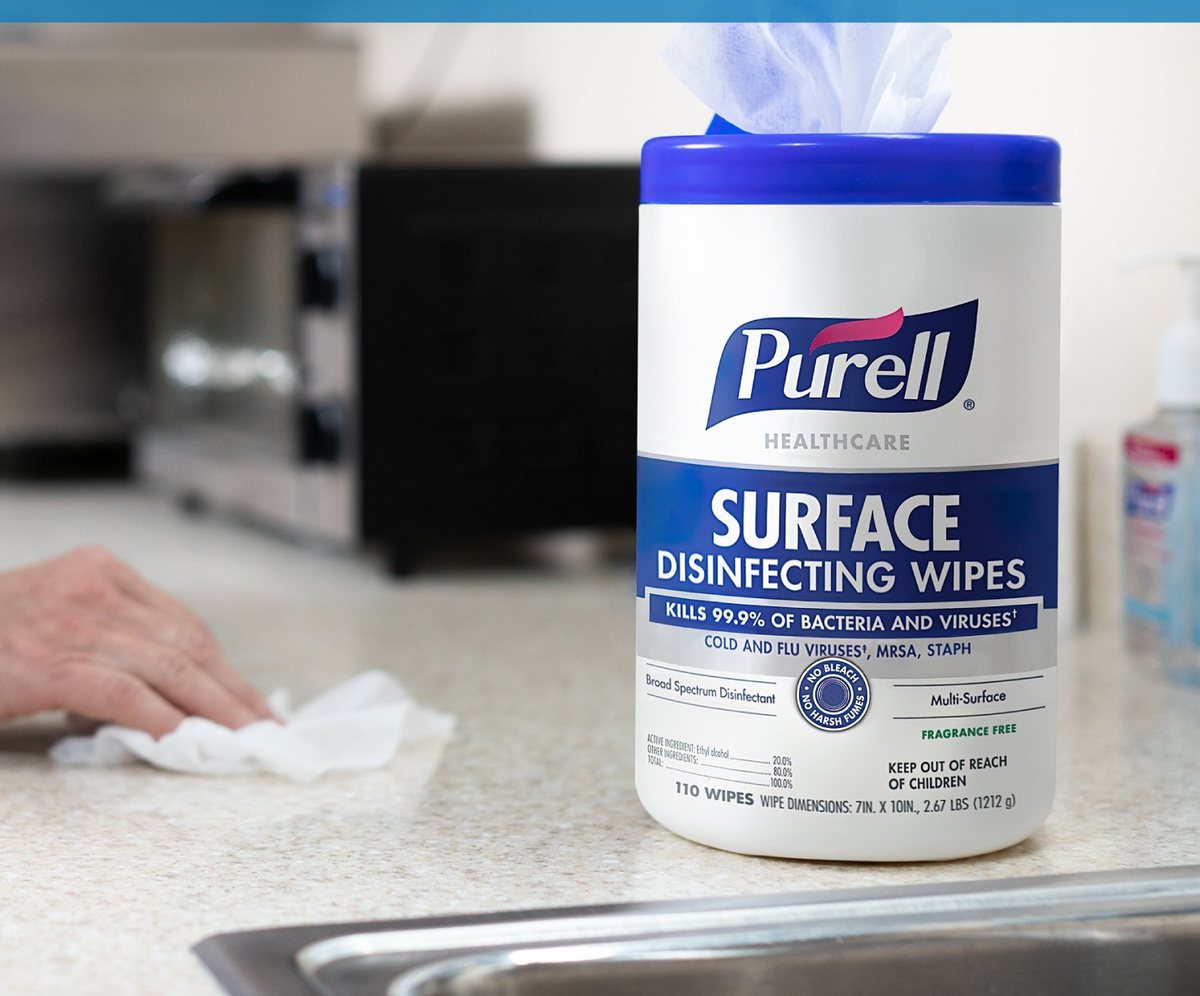
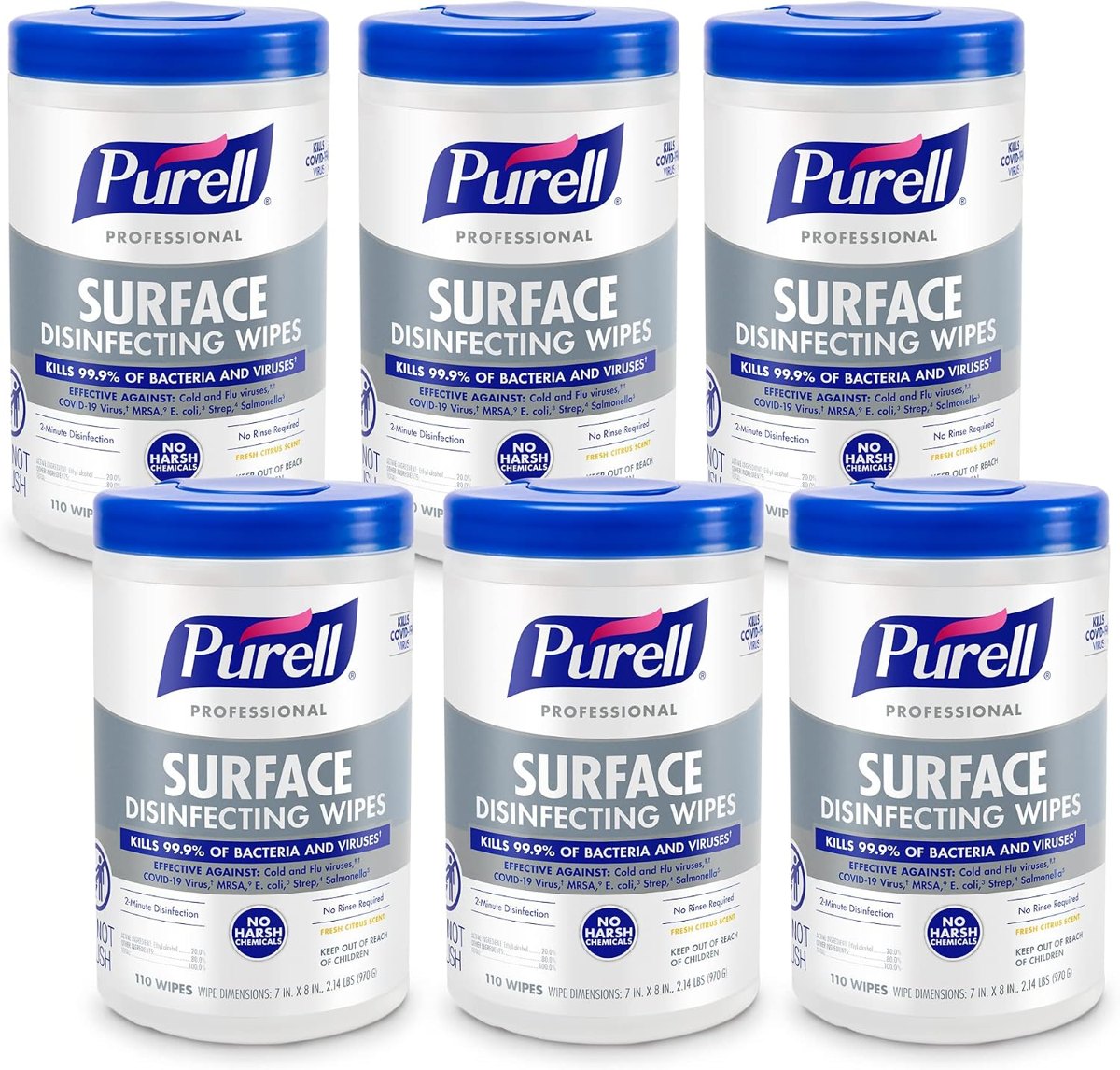
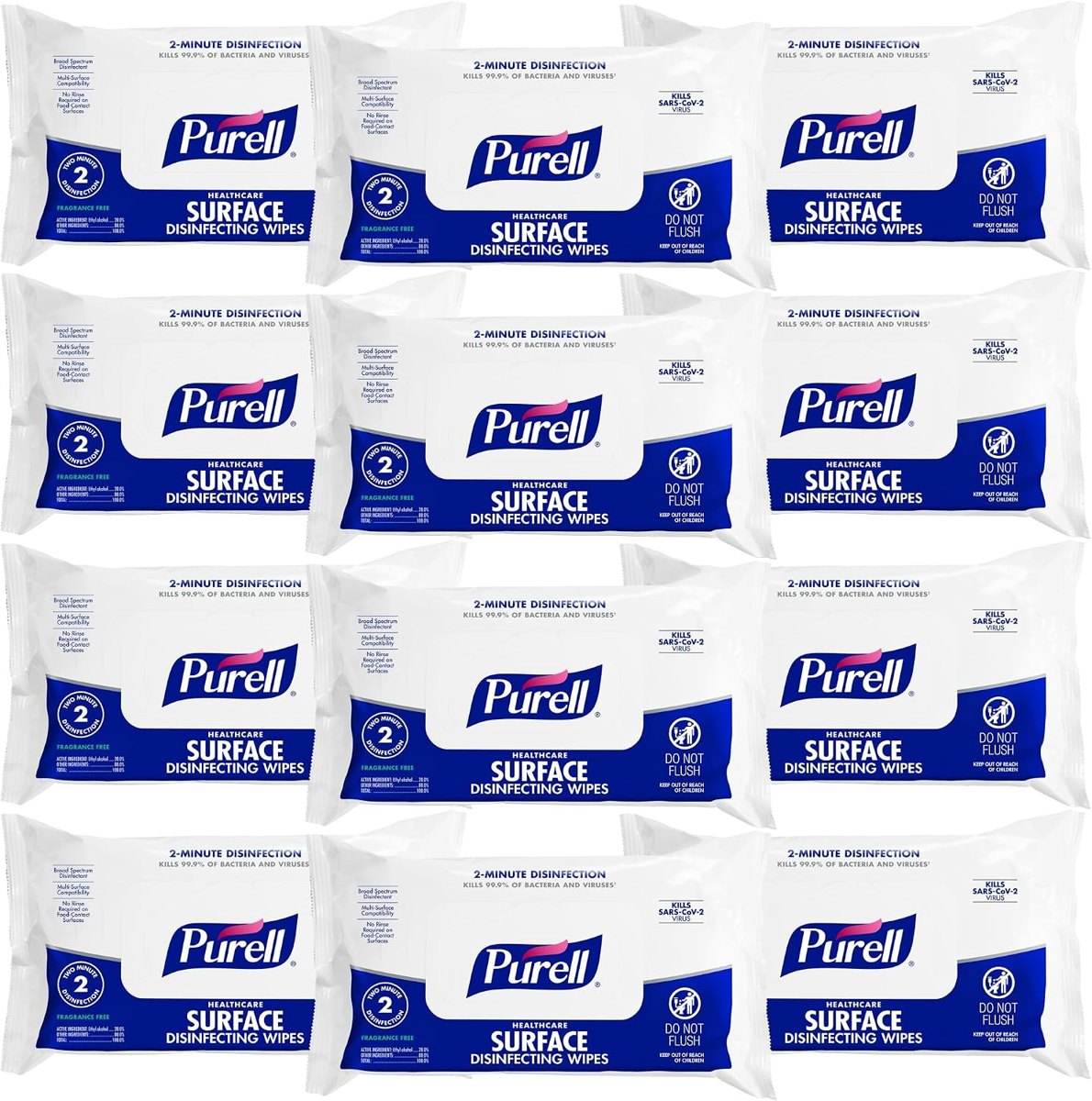
Every disinfectant has a contact time, the number of seconds or minutes the surface must stay visibly wet for the claim to hold. Bleach products often need five to ten minutes; PURELL surface sprays and wipes kill most bacteria and viruses in 30 seconds and carry their full disinfection claim at two minutes. Spray until the surface is wet, do not wipe it dry, and let it air dry. If the surface dries before the time is up, apply more.
Bleach and quaternary ammonium disinfectants work, but they need rinsing on food-contact surfaces, they fume, and they wear out the surfaces and the hands that use them; isopropyl alcohol sprays dry too fast to meet their own contact time. The PURELL multi-surface formulas use a patented, alcohol-based solution with no bleach, no quats, no ammonia, no fragrance or scent, so there is no rinse step, no residue, and the room stays occupied while the cleaner works. The ingredient list is short enough to read on the bottle, and the formula is effective against the pathogens on the label, including SARS-CoV-2, cold and flu viruses, staph, MRSA, E. coli, salmonella and Klebsiella pneumoniae, with no protection lost on soft surfaces. It is approved for use around people, pets and food when used as directed.
Clean visibly dirty surfaces first with water and a cloth; a disinfectant cannot reach germs under grease. Then spray the mist or wipe the surface wet, walk to the next one, and let the first air dry; keep the 32 oz bottle on the cart and a gallon refill in the closet. In a classroom, a clinic or a restaurant, pair the surface routine on countertops, desks and carts with a hand sanitizer dispenser at the door so the hands that touch the clean surfaces are clean too.
Surface Sprays & Wipes
 Surface Sprays & Wipes
 Surface Sprays & Wipes
 Surface Sprays & Wipes